
 By
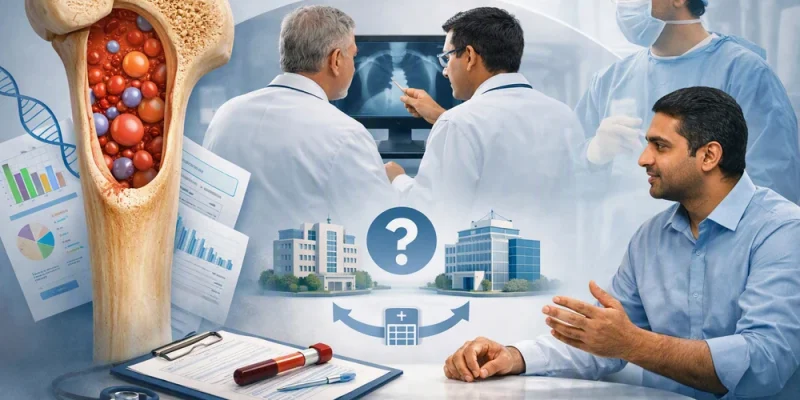
A bone marrow transplant (BMT) is one of the most complex and high-stakes medical decisions a patient can face. Whether you’re considering Bone Marrow Transplant in India for leukemia, lymphoma, or a genetic blood disorder, seeking a second opinion is not a sign of distrust-it’s a proactive step toward ensuring the best possible outcome. Platforms like BMT Hospitals make it easier than ever to access multiple expert views, compare treatment plans, and proceed with confidence.bmthospitals+1
Why Second Opinions Matter in BMT
Bone marrow transplantation involves nuanced decisions about timing, donor selection, conditioning regimens, and post-transplant care. Even among experienced hematologists, approaches can vary based on institutional protocols, available technology, and individual expertise.
Key Benefits of a Second Opinion:
- Confirmation of Diagnosis and Risk Stratification: Ensures your disease subtype, genetic markers, and prognosis are accurately assessed.
- Validation of Transplant Necessity: Not all blood cancers require immediate BMT. Some patients may benefit from targeted therapies, immunotherapy, or clinical trials first.
- Alternative Treatment Options: A different center may offer haploidentical (half-match) transplants, reduced-intensity conditioning, or CAR-T therapy not available at your initial hospital.
- Access to Clinical Trials: Leading BMT Hospitals often participate in cutting-edge research, providing access to novel drugs or cell therapies.
- Peace of Mind: Knowing your treatment plan aligns with global best practices reduces anxiety and builds trust in your care team.
Studies show that 10-20% of patients receive a different recommendation after a second opinion, and up to 30% have their treatment plan modified to include newer or less invasive options.
When to Seek a Second Opinion
Timing is critical. Ideally, seek a second opinion before starting conditioning chemotherapy or finalizing donor selection. Here are key scenarios when a second view is especially valuable:
1. At Initial Diagnosis or Relapse
If you’ve just been diagnosed with acute leukemia, myelodysplastic syndrome (MDS), or multiple myeloma, a second opinion can clarify:
- Whether BMT is the best first-line treatment or if induction/consolidation therapy should come first.
- Which genetic mutations (e.g., FLT3, NPM1, TP53) influence transplant timing and donor choice.
- Whether you qualify for targeted therapies (e.g., midostaurin for FLT3+ AML) that could delay or replace transplant.
2. When Donor Options Are Limited
If you lack a fully matched sibling donor, a second opinion can explore:
- Haploidentical Transplants: Half-match donors (parents, children, siblings) are now viable at many Indian centers, with outcomes comparable to matched donors.
- Unrelated Donor Registries: DATRI, DKMS, and international registries may have suitable matches you haven’t considered.
- Cord Blood Transplants: An option for pediatric patients or adults with rare HLA types.
3. If You Have Comorbidities or Are Older
Patients over 60 or those with heart, lung, or kidney disease may be told they’re “too high-risk” for standard BMT. A second opinion at a high-volume BMT Hospitals center can assess eligibility for:
- Reduced-Intensity Conditioning (RIC): Lower-dose chemotherapy that reduces toxicity while maintaining graft-versus-tumor effects.
- Non-Myeloablative Transplants: Minimal conditioning for frail patients.
4. Before Proceeding with Autologous vs. Allogeneic BMT
The choice between using your own stem cells (autologous) or a donor’s (allogeneic) significantly impacts outcomes. For example:
- Multiple Myeloma: Autologous BMT is standard, but some patients benefit from tandem (double) transplants or allogeneic approaches in trials.
- Acute Leukemia: Allogeneic BMT is often preferred for high-risk subtypes, but a second opinion can confirm whether your risk profile justifies the added GVHD risk.
5. If You Experience Complications or Relapse Post-Transplant
If you develop severe GVHD, infections, or disease recurrence, a second opinion can identify:
- Alternative immunosuppressive regimens (e.g., ruxolitinib, ibrutinib).
- Donor lymphocyte infusions (DLI) or second transplant options.
- Eligibility for CAR-T therapy or other salvage treatments.
How to Get a Second Opinion for Bone Marrow Transplant in India
Thanks to telemedicine and centralized directories, obtaining a second opinion is faster and more affordable than ever.
Step 1: Gather Your Medical Records
Collect:
- Pathology reports (bone marrow biopsy, flow cytometry, cytogenetics, NGS)
- Imaging studies (PET-CT, MRI)
- Treatment history (chemotherapy regimens, responses, complications)
- Donor HLA typing results (if available)
Step 2: Choose Reputable Centers
Look for BMT Hospitals with:
- NABH/JCI accreditation
- High transplant volumes (100+ annually)
- Dedicated haploidentical and pediatric programs
- Published outcomes databmthospitals+1
Top centers include Tata Memorial (Mumbai), CMC Vellore, Apollo (Delhi/Chennai), Fortis (Gurugram), Medanta (Gurugram/Noida), and Narayana Health (Bengaluru).indicaretourism+1
Step 3: Use Online Consultation Platforms
Many hospitals offer virtual second opinions:
- Upload records securely via hospital portals or platforms like BMT Hospitals.
- Schedule video calls with hematologists to discuss your case.
- Receive written recommendations within 3-7 days.
Step 4: Compare Recommendations
Ask each expert:
- Do you recommend BMT now, later, or not at all?
- What type of transplant (autologous, allogeneic, haploidentical) and why?
- What conditioning regimen do you propose (myeloablative vs. reduced-intensity)?
- What are your center’s survival and complication rates for my disease?
Step 5: Make an Informed Decision
Weigh factors like:
- Alignment with global guidelines (e.g., NCCN, EBMT)
- Center experience with your specific condition
- Logistics (location, cost, insurance coverage)
- Your comfort level with the team
Addressing Common Concerns
“Will my doctor be offended?”
Most physicians welcome second opinions. It demonstrates engagement and often strengthens the doctor-patient relationship.
“Isn’t this a waste of time and money?”
Second opinions typically cost ₹5,000-₹20,000 for virtual consultations-a small investment compared to the lifelong impact of a transplant decision. Many hospitals waive fees if you proceed with treatment there.
“What if the opinions conflict?”
Conflicting views are common in complex cases. In such scenarios, seek a third opinion or ask both doctors to discuss your case directly. Tumor boards (multidisciplinary meetings) at major BMT Hospitals often resolve discrepancies.
Final Thoughts
Seeking a second opinion is a smart, proactive step-not a sign of doubt. For patients considering Bone Marrow Transplant in India, accessing multiple expert perspectives through platforms like BMT Hospitals ensures you choose the right procedure, at the right time, with the right team. In a field where outcomes hinge on precise decisions, a second view can be the difference between uncertainty and confidence, between good care and the best possible care.





Comments