
 By
By 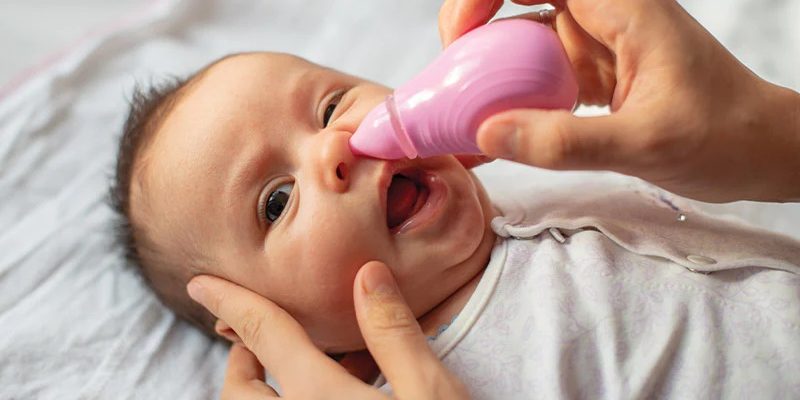
You may have heard about using breastmilk in nose for congestion as a natural home remedy, especially when a baby is too young for most medications. Since breastmilk contains antibodies and is known for its healing properties, some believe it can help loosen mucus or fight infection inside the nose. But is this practice safe, or even effective?
In this article, we will discuss where this remedy came from, what pediatricians say about it, and why it is often compared to other options like saline drops and nasal aspirators.
Infant congestion occurs when a breathing airway is narrowed due to mucus buildup or inflammation. So, when dealing with a newborn stuffy nose, it means that their nasal passages are partially blocked.
Since babies have smaller nasal passages to begin with, it doesn’t take as much to obstruct them, which is why baby congestion can be more challenging and more common than congestion in older children.
Several issues can lead to a congested baby. As mentioned, infants have smaller air passages, and are more likely to have newborn congestion. The signs of congestion in babies are quite similar and include:
- Noisy or more noticeable breathing
- Snoring when asleep
- Mild difficulty when feeding
- A blocked nose
- Coughing
- A runny nose
- sniffling
Understanding the Rationale Behind the Home Remedy
The concept of using breastmilk in the nose for congestion comes from the well-known benefits of breastmilk when it is consumed. Breastmilk contains antibodies, anti-inflammatory components, and natural enzymes that help protect babies from infections. Because of these properties, many parents believed that it might also help clear mucus or fight germs when applied inside the nose.
Additionally, breastmilk has been used by some families for some time to treat mild eye infections, skin irritations, and other minor issues, making parents assume it may provide similar soothing effects in the nasal passages. Many mothers prefer natural remedies, too, especially since newborns cannot take most over-the-counter cold medicines.
The Medical Stance: Why Many Pediatricians Advise Against It
While some people feel that putting breast milk in a baby’s nose works to soften mucus, pediatricians don’t agree with this.
According to doctors, the infants’ nasal passages are a different environment, and placing milk inside them can cause more harm than good. Breastmilk is a nutrient-rich fluid, ideal for feeding, but also capable of promoting bacterial growth when left in warm, moist areas like the nose. Instead of helping clear mucus, it may actually create an environment where bacteria multiply more easily, potentially worsening congestion or leading to infection.
Pediatricians also highlight that there is no scientific evidence showing breastmilk effectively breaks down mucus or improves nasal airflow when used this way. Unlike saline drops, which is proven to thin mucus and keep nasal passages moist, breastmilk has not been shown to provide the same benefits.
Contrasting Breastmilk with Safe, Recommended Saline Drops
Saline drops are safe to use in babies with nasal congestion. They help clear mucus and draw moisture from swollen nasal tissues so your baby can breathe more comfortably.
Saline drops can be administered in the nose using a sterile nose dropper and removed using a clean bulb syringe. Not to mention, it is specifically formulated to loosen mucus, moisturize dry nasal passages, and help babies breathe more easily. It is safe, gentle, and backed by science.
Breastmilk, on the other hand, is not designed to thin mucus or clear the nasal airway. In fact, its natural sugars and nutrients can actually promote bacterial growth when placed in the warm, moist environment of the nose. This may lead to worsening congestion or increase the risk of
infection.
Saline drops work by breaking down thick mucus so it can be removed easily with gentle suction using nasal aspirators. They do not irritate the nasal lining and can be used several times a day, even in newborns.
Here’s how to put saline drops in your baby’s nose:
- Place your baby in your lap
- Put two to three saline drops in one nostril
- Point the bulb syringe away from your baby
- Keep the bulb squeezed and place the small tip in the nostril where you put the drops
- Gently release the bulb
- Squeeze the bulb syringe into the sink or a tissue to expel its contents
Potential Risks: Introducing Bacteria and Causing Ear Infections
Breastmilk is beneficial and safe when consumed, but when placed in the nose for congestion, it can introduce several risks. Rather than clearing the mucus, the trapped milk in the nasal passages can worsen congestion or irritate the nasal lining.
One more concern is the risk of the milk entering the Eustachian tubes, small passages that connect the nose to the middle ear. When liquids enter these tubes, they can contribute to fluid buildup behind the eardrum. Over time, this increases the risk of ear infections, especially in babies whose ear structures are still maturing.
Pediatricians warn that while breastmilk is excellent for feeding, using it inside the nose can unintentionally lead to:
- Increased bacterial growth
- Worsening congestion
- Nasal irritation or inflammation
- Higher risk of middle ear infections
- Possible blockage of the nasal airway
Since these risks outweigh any unproven benefits, experts recommend choosing safer and more effective options, like saline drops and nasal aspirators, when addressing your baby’s congestion.
Anecdotal Reports and Traditional Uses for Nasal Congestion
Although there is not enough scientific evidence to prove that breastmilk in the nose for congestion, many parents continue to share personal stories about using it as a home remedy. In some cultures, breastmilk has long been believed to soothe minor illnesses, like eye irritation, ear discomfort, and skin rashes. These experiences often lead other parents to assume it may help relieve nasal congestion, too.
Some mothers say that a few drops of Breastmilk seemed to loosen mucus or make their baby sneeze, giving the impression of temporary relief. Others say the practice was passed down from older relatives who relied on natural remedies before modern products like saline drops and nasal aspirators became widely available.
The Best Practices for Clearing Congestion Safely at Home
When your baby is congested, it is important to rely on safe, proven methods instead of untested remedies like putting breastmilk in the nose for congestion. Pediatricians recommend several safe at-home strategies to help ease nasal blockage and improve your baby’s breathing.
- Use saline drops: Saline helps thin mucus, and it is safe for infants.
- Clear mucus with gentle nasal aspirators: After applying saline, use nasal aspirators to remove loosened mucus.
- Keep your baby hydrated: frequent feedings help thin mucus naturally from the inside.
- Maintain a clean, allergen-free environment: reduce exposure to dust, smoke, and strong fragrances that can worsen congestion.
Key Alternatives: Humidifiers, Steam, and Proper Positioning
There are safer and more effective methods than using breastmilk in the nose congestion.
- Cool-Mist Humidifiers: Humidifiers add moisture to the air, which helps thin mucus and keeps nasal passages from drying out.
- Steam Therapy: Sitting with your baby in a closed bathroom filled with warm steam can help loosen thick mucus naturally.
- Proper Upright Positioning: Holding your baby upright helps mucus drain more easily and reduces nasal blockage.
When to Seek Professional Medical Advice for Baby Congestion
Most cases of baby congestion should clear up within a few days or weeks. Make an appointment with your pediatrician right away for signs of respiratory problems, such as:
- A breathing rate of more than 60 breaths per minute that interferes with feeding or sleep
- Rapid or hard breathing that makes feeding difficult
- Flaring nostrils, which is a sign that the baby is struggling to take in air
- Retractions, which occur when the baby’s ribs suck in on each breath
- Moaning or grunting after each breath
- A blue tint to the skin, especially around the lips or nostrils










Comments